Loading...
Serving Gainesville, FL and surrounding areas. (352) 663-1185
A pressure-treated deck is the most cost-effective way to add outdoor living space to your Gainesville home - when it is built correctly, with the right materials for this climate and a permit that protects your investment.
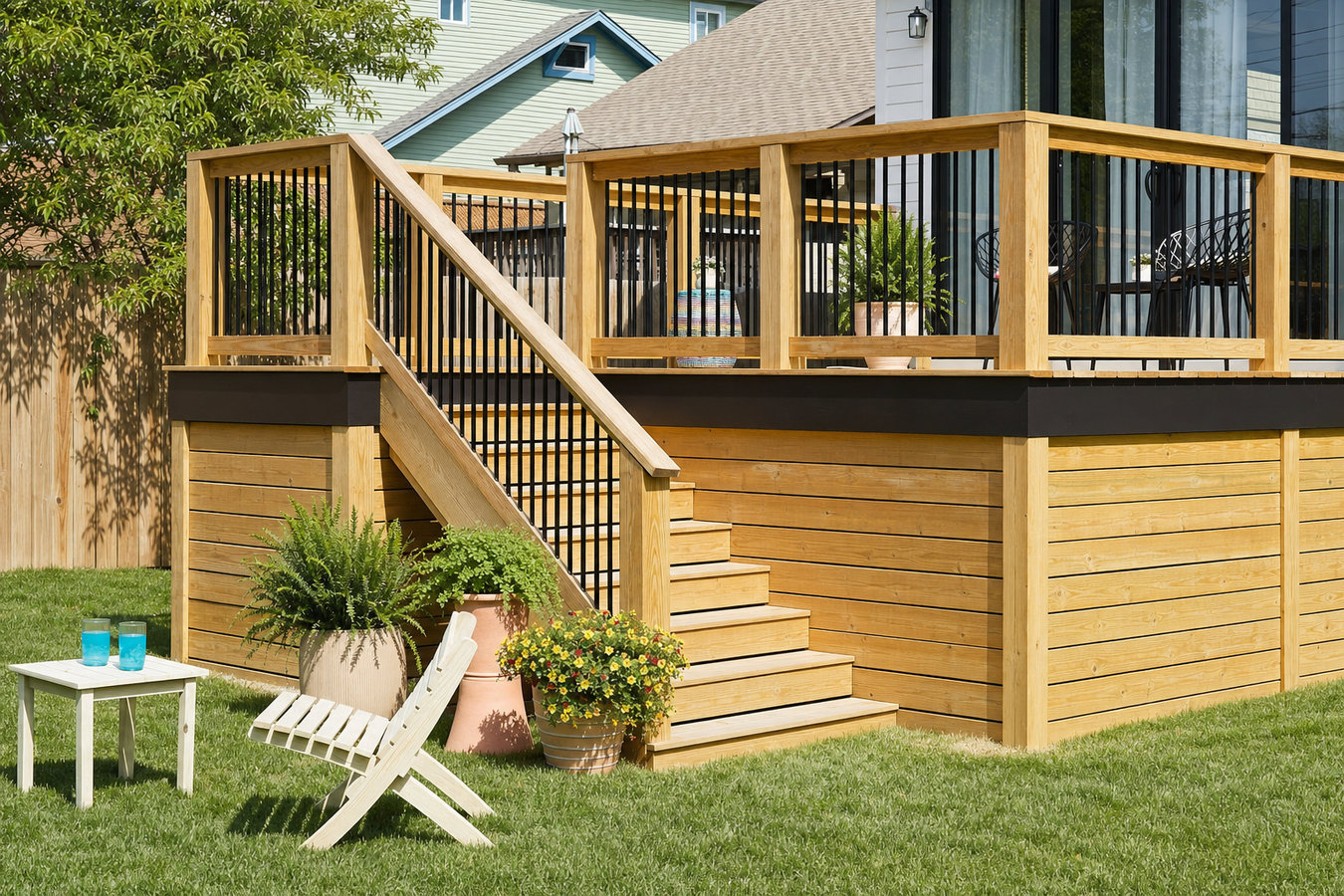
Pressure-treated wood deck construction in Gainesville, FL starts with concrete footings dug to stable soil, followed by posts, beams, and joists before the decking boards go on top, with most residential decks taking three to seven working days of construction once the permit is approved.
Pressure-treated lumber is regular wood soaked in a preservative solution under high pressure, which forces the chemicals deep into the wood fibers to protect against rot, fungal decay, and insects. In a climate like Gainesville's - where summer rain and humidity arrive together for months at a time - the grade of treatment used matters a great deal. Posts that sit in or near the soil need a higher treatment level than the boards on the walking surface. Most homeowners do not think to ask about this, but it is one of the single most important decisions in building a deck that holds up here.
If you are weighing your material options and wondering how pressure-treated compares to composite long-term, the page on deck staining and sealing covers what ongoing maintenance looks like in Gainesville's climate - useful context before you make a final decision.
If you feel movement when you walk across your deck - especially near the edges or stairs - the structure underneath may be failing. In Gainesville's sandy soil, footings can shift or settle over time, and that movement shows up as flex in the deck surface long before anything looks visibly wrong from the outside.
Healthy pressure-treated wood is firm and solid. If you press your thumb into a board and it gives, or if you notice soft spots near where the deck attaches to your house, that is wood rot - and it spreads. Gainesville's humidity and long wet season accelerate this process, especially on decks that have not been sealed in several years.
Subterranean termites build pencil-thin mud tunnels to travel between the soil and the wood they are feeding on. If you spot these tubes on your deck posts, stairs, or framing - even if the wood looks fine on the surface - it is worth having both a pest professional and a deck contractor take a look. Gainesville's termite pressure is high enough that this is a real and common finding on older decks.
If you are adding a pool, hot tub, or outdoor kitchen, or if your home simply has no outdoor structure yet, a properly permitted and engineered pressure-treated deck is the right foundation. Gainesville's weather from October through April is some of the best in the state - a well-designed deck makes that outdoor time feel intentional.
Every pressure-treated deck project starts with an on-site visit where we look at your yard, discuss your goals, and talk through design options - size, shape, height, whether you want stairs, railings, built-in seating, or space for a grill station. We price everything out in writing before any work starts, with materials and labor listed separately so you can see exactly where your budget is going. One thing we pay close attention to on every project is the treatment grade of the lumber we use: ground-contact posts and footers get a higher-rated preservative than above-ground boards, which is what Gainesville's termite environment demands. The American Wood Protection Association sets the standards for wood treatment levels, and we build to those standards on every project.
For homeowners who want a natural wood aesthetic but are willing to consider alternatives, we can also walk you through how a pressure-treated deck compares to cedar wood deck construction in terms of longevity, appearance, and maintenance demands in this climate. Both are legitimate choices, and the right answer depends on your priorities.
The most straightforward and cost-effective option - suits flat or gently sloped yards and is often the fastest project from permit to final inspection.
For homes where the living area sits above grade - requires deeper footings, heavier posts, and more structural engineering, but opens up the backyard of two-story homes.
Code requires railings on decks above a certain height - we design railings that meet Florida's requirements and still look intentional rather than tacked on.
For homeowners who want to expand an existing deck rather than rebuild from scratch - we assess what is worth keeping and plan the addition to match the existing structure.
Gainesville sits in North Central Florida and averages about 51 inches of rain per year, with a wet season that runs roughly from June through September. That constant moisture cycle puts real stress on wood decks - which means the quality of your footings, hardware, and wood treatment grade matters more here than it would in a drier climate. Much of the city also sits on sandy soils that drain quickly but can shift under heavy loads if footings are not dug to reach stable, compacted ground. A contractor who has built decks specifically in Gainesville's soil conditions knows to check this, rather than assuming standard footing depth will be sufficient.
Termite pressure adds another dimension. Alachua County falls in a very high termite hazard zone, and subterranean termites are active here year-round. A deck built with the wrong treatment grade for ground-contact lumber is effectively a food source waiting to be found. The University of Florida IFAS Extension provides regional data on termite hazard levels that informs how responsible contractors approach material selection here. We serve homeowners across the region, including Lake City and High Springs, where similar soil and termite conditions apply and where proper material selection is just as important as it is in the city.
We respond to most requests within one business day and schedule a free site visit - 30 to 60 minutes - to measure your space, look at where the deck will attach to your home, and check ground conditions. You get a written, itemized estimate, not a single number with no detail.
Before any work starts, we apply for the required building permit through the City of Gainesville or Alachua County depending on your address. We also ask about HOA requirements upfront - some Gainesville neighborhoods require design approval before a permit can even be applied for, and getting that sequence right saves weeks.
Work starts with footing excavation and concrete pour. After the footings cure, the crew builds the structural frame - posts, beams, joists - and a city inspector reviews the framing before the decking boards go on top. Using the correct treatment grade for ground-contact wood is handled at this stage.
Once the deck is complete, we schedule the final city or county inspection. After it passes, we clean up the site fully and walk you through the finished deck - including when to plan your first sealing, typically six to twelve months after installation as the new lumber dries.
We respond within one business day, handle every permit step, and give you a written itemized quote before a single board is ordered.
(352) 663-1185We use the appropriate preservative treatment level for ground-contact lumber in Gainesville's high-termite-hazard zone. That is not an optional upgrade - it is how you build a deck that does not become a termite problem in five years.
We apply for every required permit - city or county depending on your address - and coordinate all required inspections. A contractor who skips this step is passing a serious legal and financial risk onto you.
Much of Gainesville sits on sandy soils that can shift under heavy loads if footings are not dug to reach stable, compacted ground. Our footings are sized and dug appropriately for local soil conditions - not to a generic standard that may not hold.
Our quotes break down materials, labor, permit fees, and cleanup separately. You know what you are paying for before you sign. The American Wood Council's residential deck guide is the nationally recognized framing standard our builds follow.
Building a deck correctly in Gainesville means accounting for the climate, the soil, and the permit process from day one. That is what separates a deck that holds up for 20 years from one that starts showing problems after the first few rainy seasons.
A natural wood alternative to pressure-treated lumber - cedar is naturally rot-resistant and has a warmer aesthetic, making it a popular choice for homeowners who prefer the look and feel of a premium wood deck.
Learn MoreProtecting your pressure-treated deck with the right stain and sealer is the single most effective way to extend its life in Gainesville's wet climate - this service covers what that process looks like and when to do it.
Learn MoreGainesville's busy season fills up fast - lock in your start date now so your deck is finished and inspected before the weather turns and your schedule fills up.